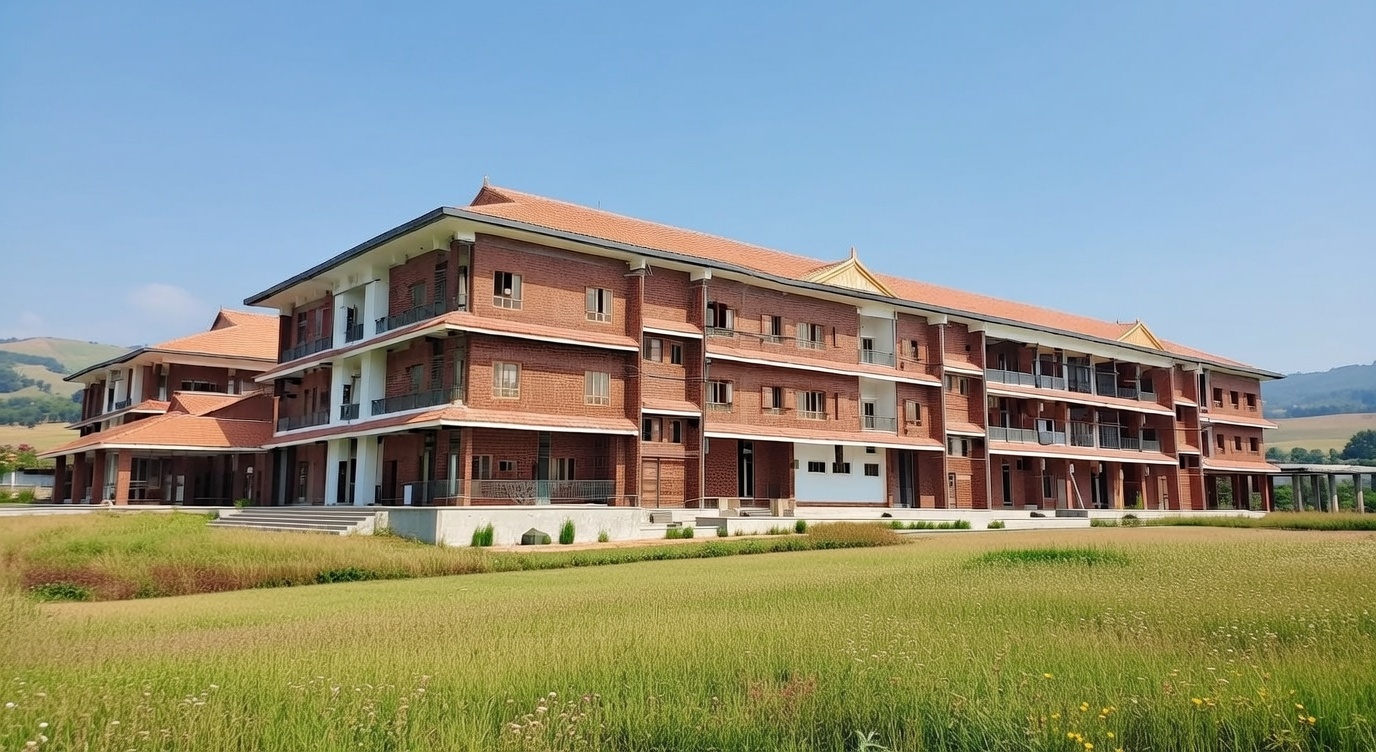
The International Research Institute of Ayurveda (IRIA), an autonomous institution under the Government of Kerala, stands as a premier global hub for transdisciplinary and translational research. Established on a sprawling 300-acre campus in Kalliad, Kannur, IRIA is dedicated to scientifically reaffirming the timeless principles of Ayurveda through the lens of modern biotechnology, genetics, and evidence-based medicine. With its state-of-the-art 100-bed research hospital and Model Patient Care Centre, advanced medicinal plant nursery, and specialised departments focusing on cancer and degenerative diseases, the institute serves as a bridge between traditional wisdom and contemporary healthcare innovation. By fostering international collaborations and preserving rare palm-leaf manuscripts, IRIA is poised to redefine global wellness and set new benchmarks in the validation and practice of Ayurveda for the benefit of humanity.
By the mid-2010s, a strategic realisation emerged within the Government of Kerala. For Ayurveda to evolve from being perceived largely as a wellness-oriented tradition into a globally acknowledged curative and preventive science, it required a decisive paradigm shift. What was needed was not merely an expansion of education or clinical services, but the creation of a dedicated institution that could question, analyse, validate, and translate Ayurvedic knowledge using modern scientific methodologies, without diluting its classical foundations.
This vision led to the establishment of the International Research Institute of Ayurveda (IRIA) in early 2017. Conceived as a flagship research institution, IRIA was designed to function as a transdisciplinary hub where ancient palm-leaf manuscripts could be studied alongside molecular biology, where the biodiversity of the Western Ghats could be pharmacologically catalogued, and where the experiential wisdom of traditional Vaidyas could intersect with advances in genomics, biotechnology, data science, and public health.
IRIA represents not merely an infrastructure project, but a long-term intellectual and administrative commitment to reposition Ayurveda within the global health discourse.
2017
Government of Kerala Initiative
Transdisciplinary Research
Integrating Tradition & Science
Global Health Leadership
Repositioning Ayurveda Worldwide
IRIA's primary objective is to conduct exploratory research on traditional manuscripts, extensive medicinal plant and Ayurvedic drug research. The institute promotes translational, clinical, and public health research by collaborating with multidisciplinary science institutions around the globe.
To identify, collect, evaluate, validate, and disseminate information on Kerala Ayurveda.
To develop principles, medicines, and practices available in Ayurveda into evidence-based products and protocols for community health benefits.
To ensure the quality, safety, efficacy, availability, accessibility, and affordability of Ayurvedic products, practices and public health services.
Building bridges for research excellence and ensuring long-term impact
IRIA identifies leading nationwide and international institutions for strategic collaboration and outlines potential accreditations and affiliations.

National Accreditation Board for Hospitals & Healthcare Providers (NABH) accreditation proposed for the IRIA Research Hospital.

The budgeting plans, funding sources, grants, and sustainable income models to support long-term growth, and recommends for CSR registration and building a corpus fund.
IRIA is proposed as an autonomous institute, governed under a society registered in accordance with the Societies Registration Act of 1860. Governance is endowed in a Governing Council, supported by an Executive Committee, Scientific Advisory Committee, departmental resource groups, and a Finance Committee that will look after policy, governance, administration, scientific guidance, budget and fund planning.
The Director, along with the Registrar, Dean of Academics, Dean of Research, Medical Superintendent, and Heads of Departments, constitutes the institute’s top-level administrative leadership structure.
Development of necessary policy, regulation, and SOPs along with designing and launching the website.
100-bedded research hospital and model patient care centre.
Dedicated Manuscript Studies Centre.
Advanced medicinal plant nursery.
Connecting with major Ayurveda, biotechnology, and pioneer research institutions.
Through these efforts of IRIA, the Government of Kerala reaffirms its conviction that ancient knowledge and modern science can advance together. Anchored in tradition and driven by evidence, IRIA seeks to position Ayurveda as a scientifically validated, socially relevant, and globally integrated system of medicine.